

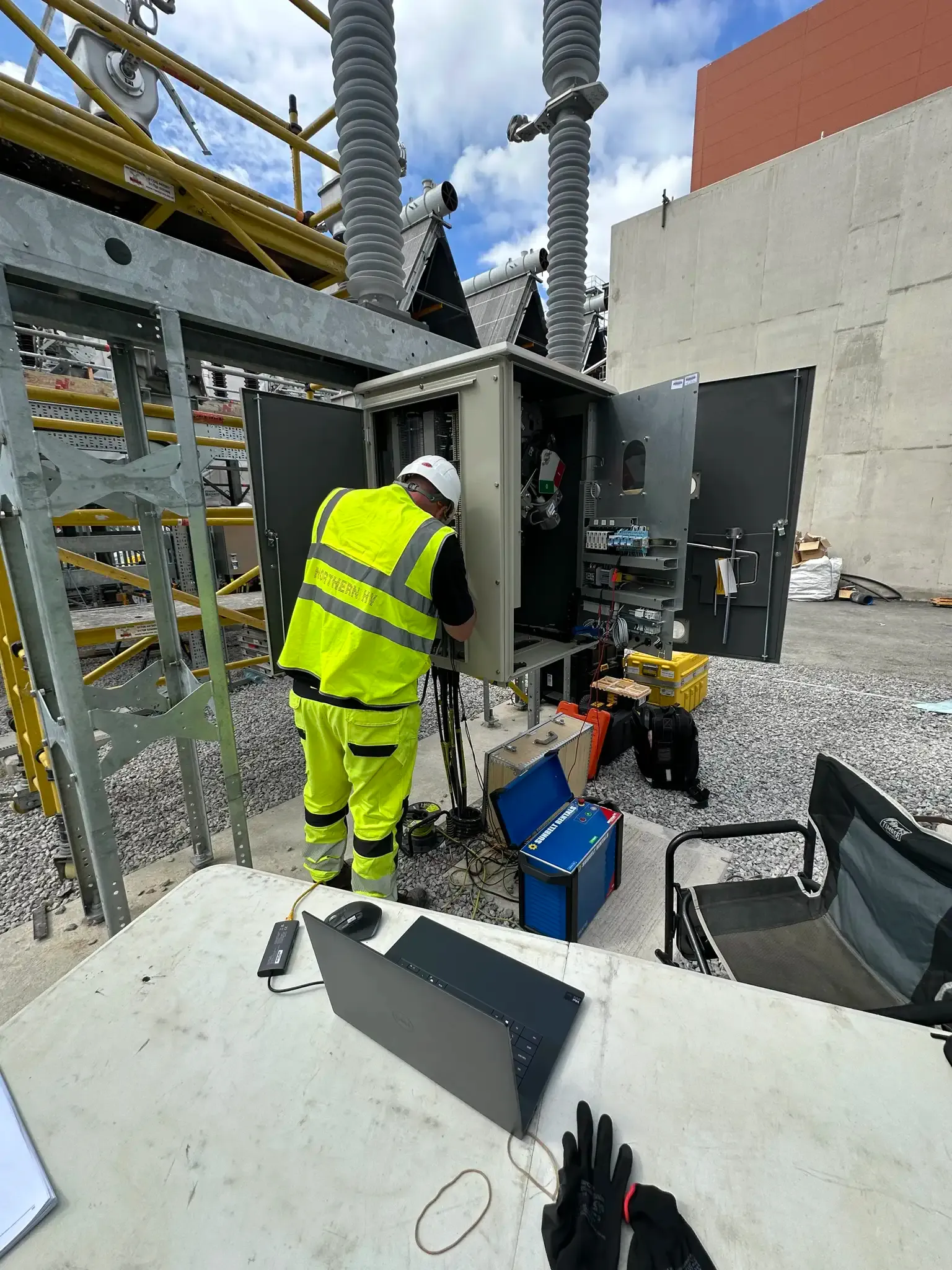
Electrical Testing and Commissioning In A HV Environment
Learn what electrical testing and commissioning involves, why it matters in HV projects and how it ensures systems are safe and operational.
Published
Reading time
4 min read
Electrical testing and commissioning is the process of inspecting, testing and verifying an electrical system before it is put into operation. Although the two terms are often grouped together, they each play a different role within a project. Testing focuses on checking the safety and integrity of the installation. While commissioning ensures the system operates correctly and performs as intended.
Together, they form one of the most important stages of any electrical project, particularly within high voltage (HV) environments.
Why Electrical Testing and Commissioning Matters
Before an electrical system is energised, it needs to be proven safe, compliant and fully operational. Testing and commissioning helps identify issues before they become serious problems. It confirms that installations meet design requirements and protection systems operate correctly. But most importantly that all components are functioning safely.
Without this process, faults can remain hidden until the system is live. This can increase the risk of downtime, equipment damage and safety incidents.
What Is Electrical Testing?
Electrical testing focuses on the condition and safety of the installation itself. This involves checking cabling, switchgear, transformers and other electrical components. Heping to ensure they have all been installed correctly and meet the required standards.
Testing may include insulation resistance testing, continuity checks and protection testing. This is very much dependent on the type of system involved however. But the aim is always the same, to confirm the installation is safe before power is introduced.
What Is Electrical Commissioning?
Electrical commissioning takes place once testing has been completed successfully. This stage verifies that the system operates correctly under real world conditions. Engineers check that equipment communicates properly, protection systems respond correctly and the installation performs in line with the original design.
Commissioning is effectively the final stage before energisation and handover.
Electrical Testing and Commissioning in HV Projects
Testing and commissioning is especially important in high voltage systems due to the increased complexity and risk involved. HV projects often require detailed testing of:
- Switchgear and protection systems
- Transformers and substations
- HV cabling and terminations
- Earthing and isolation systems
Even small faults within an HV environment can create major operational or safety issues, which is why the process must be carried out thoroughly and by experienced engineers.
When Does Testing and Commissioning Take Place?
Testing and commissioning usually takes place towards the end of a project, once installation work has been completed. However, it should never be treated as an afterthought. Planning this stage early helps avoid delays and ensures the project progresses smoothly through to energisation.
It may also be required after:
- System upgrades
- Maintenance work
- Fault repairs
- Equipment replacement
Common Issues Found During Testing and Commissioning
The process is designed to identify problems before the system becomes operational. Common issues can include incorrect wiring, failed components, protection setting errors or installation defects. Identifying these early prevents costly downtime and reduces the risk of future failures.
In many cases, testing and commissioning provides the final level of quality assurance before a system goes live.
Common Challenges During Testing and Commissioning
Testing and commissioning can uncover issues such as wiring errors, incorrect protection settings or installation defects that were not identified earlier in the project.
Delays can also occur where documentation is incomplete or commissioning has not been planned properly within the project timeline. Identifying and resolving these issues before energisation is essential for safety, compliance and long term system reliability.
How Northern HV Supports Testing and Commissioning
At Northern HV, testing and commissioning forms a core part of our project delivery process. We provide comprehensive HV and LV testing and commissioning services, supporting commercial and industrial projects across the UK. Our engineers work closely with clients to ensure systems are safe, compliant and ready for energisation.
From substations and switchgear through to full infrastructure projects, we deliver a practical and thorough approach at every stage.